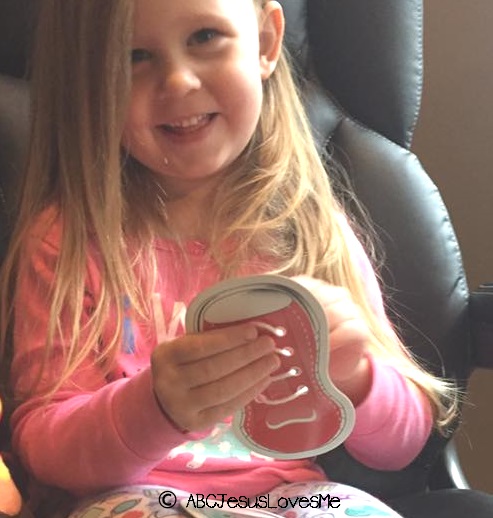
Lacing activities are a simple but powerful way to prepare little hands for writing. As children thread a lace through beads or holes, they strengthen the small muscles in their hands and fingers while practicing the coordination needed for future handwriting. Lacing also encourages concentration, patience, problem-solving, and eye-hand coordination. Best of all, children think they are simply playing!
Offer a variety of lacing activities throughout the preschool years. Begin with larger objects that are easy to grasp and gradually introduce smaller pieces as children's skills improve. To make lacing easier, wrap a small piece of tape around the end of the string to create a firm tip. This prevents the string from fraying and helps the child thread it through the holes more easily.
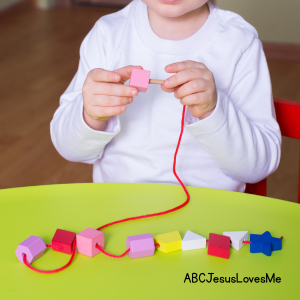
Large wooden or plastic beads are a wonderful place to begin. They help children develop fine motor skills, bilateral coordination (using both hands together), visual tracking, and hand-eye coordination.
Start by letting the child freely thread beads onto a string or shoelace. As confidence grows, encourage simple patterns such as red, blue, red, blue, or small, large, small, large. Invite the child to count the beads, sort them by color or shape, or create necklaces and bracelets.
Move to food items like Cheerios, Froot Loops, or circular noodles.
There is no wrong way to lace beads, so allow plenty of time for creativity and exploration.
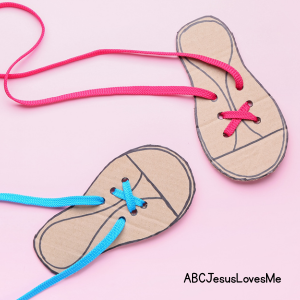
Lacing cards help children practice precision and control. Threading a lace through holes around the edge of a picture strengthens the muscles needed for writing while teaching children to follow a sequence and pay attention to detail.
Begin with simple cards that have fewer, widely spaced holes. Show the child how to push the lace through one hole and pull it out the next. As skills improve, introduce cards with more holes or more detailed shapes. Lacing cards can also reinforce themes by using animals, seasons, Bible stories, or other learning topics.
Lacing cards also introduce the basic skills needed for sewing by teaching children how to thread a lace through a series of holes in sequence.
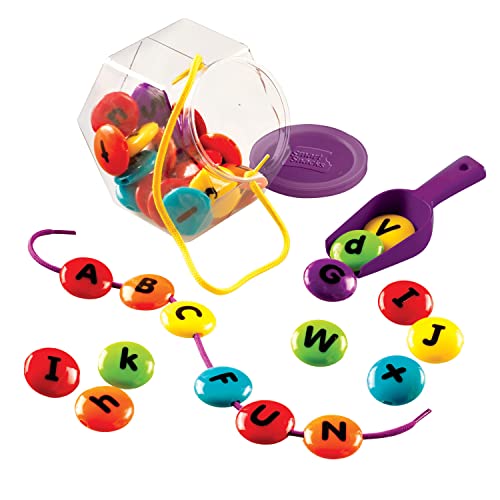
Alphabet beads combine fine motor practice with early literacy skills. As children thread the beads, they become familiar with letters while strengthening the muscles and coordination needed for writing.
Begin by having children find and lace the letters in their own name. As they become more confident, encourage them to spell simple words, match uppercase and lowercase letters, or sort vowels and consonants. You can also call out a letter sound and ask the child to find the matching letter bead. Remember that the goal is exposure and practice, not perfection.
Homemade lacing activities are inexpensive, easy to create, and can be customized to match your child's interests or what you are learning.
Cut simple shapes from cardstock, cereal boxes, plastic lids, large sides of a liquid soap container, or craft foam, then punch holes around the edges using a hole punch. Children can lace around the outside of animals, leaves, hearts, crosses, letters, numbers, or seasonal shapes. For younger children, make the holes larger and farther apart. As children gain confidence, place the holes closer together to provide more of a challenge.
You can also create lacing beads using drinking straws cut into short pieces, large pasta with wide openings, cardboard tubes cut into rings, or empty thread spools. Pair these homemade materials with yarn, a shoestring, or a pipe cleaner for easy threading.
With just a few inexpensive supplies, you can create countless opportunities for children to strengthen their fine motor skills while having fun.
 Print the Lacing Football printable on cardstock. Color and cut out the football. Punch holes for the child to lace. idea shared by amy