The Letter H is everywhere! From horses and hearts to houses and hats, children naturally encounter the /h/ sound in their everyday world. These playful books, activities, art experiences, and snacks encourage curiosity while helping children develop letter recognition and early phonics skills.
You'll discover on this page:
Phonics songs are an excellent tool for teaching letter sounds as children prepare for reading. Sing the songs slowly, focusing on the sound of the letter. Be careful not to add a vowel to the end of the /u/ sound (avoid saying /huh/).
Phonics Song
Tune: Farmer in the Dell
H /h/ hand
H /h/ hand
/h/ /h/ /h/ /h/
H /h/ hand
Bible Version
Tune: Farmer in the Dell
H /h/ hooray
H /h/ hooray
Hooray, the high walls tumbled down
H /h/ hooray
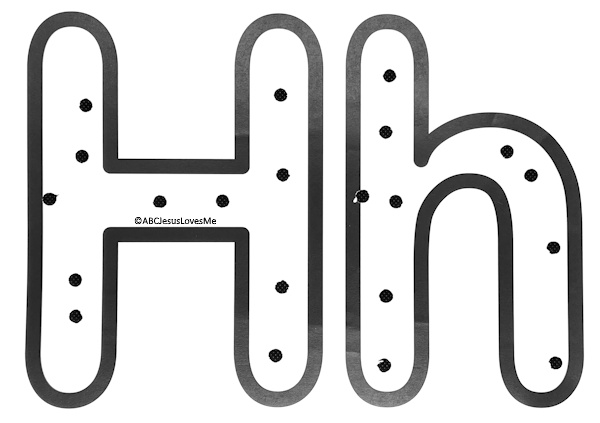
Using a hole punch, cut holes in the Letter H poster. Holes can also be made by placing the poster on a soft surface (e.g. Styrofoam or floral foam) and hammer holes with a golf tee.
For added fun, print two Letter Hh posters. Color the first poster and use a hole punch to cuts holes into the second poster. Place glue on the back of the 1st poster and lay it on top of the 2nd poster.
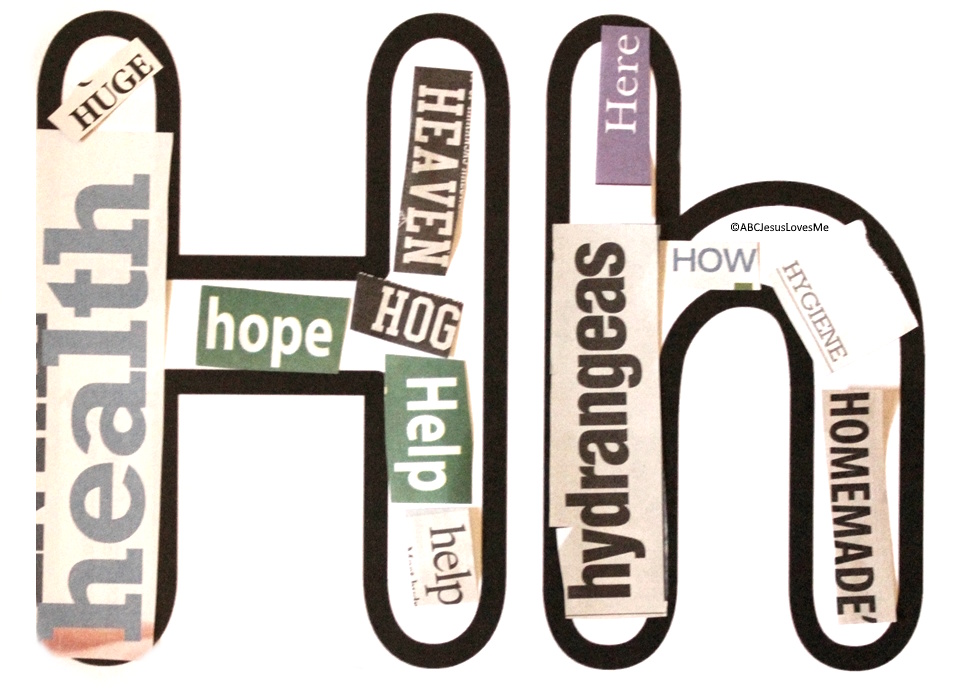
Find letter "h" words in magazine, newsletter, or junk mail to glue to the Letter H Poster.
Help your kindergartener develop a love for books with a handpicked list of the best books and expert tips to make storytime both fun and educational. This free packet focuses on pre-reading skills, offering practical advice to engage your child, nurture their love of reading, and build essential literacy skills—giving your child a strong foundation for reading success!
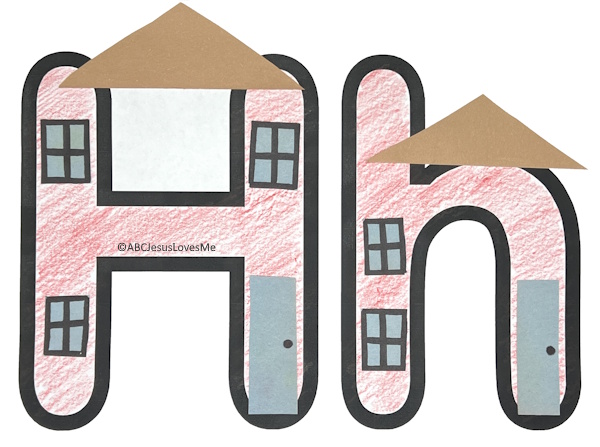
Make the Letters H Poster into two homes. Color the letters. Draw or glue on rectangle windows and doors. Add a triangle roof.
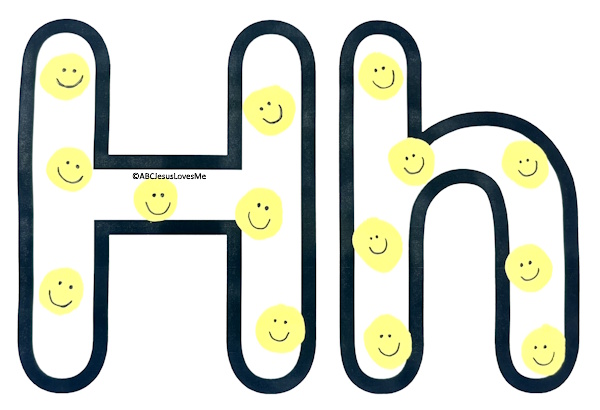
Add happy face stickers to the Letter Hh poster.
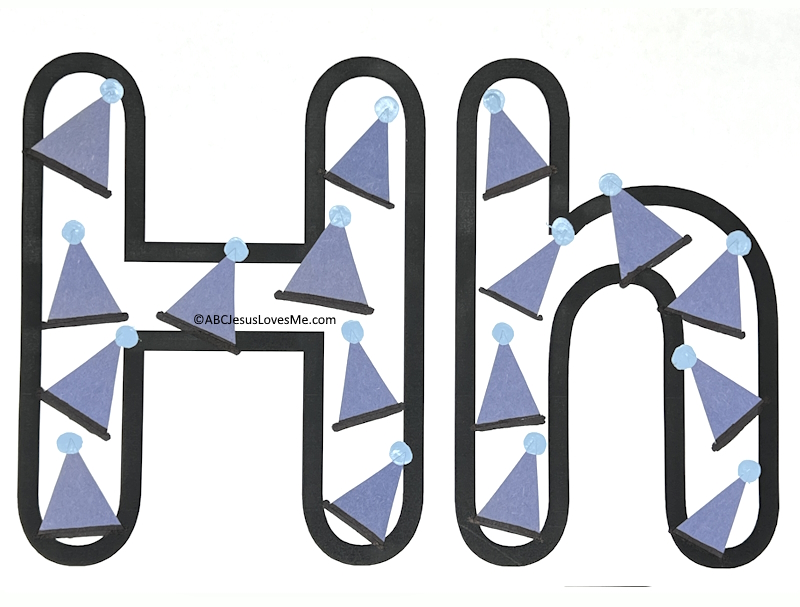
Glue triangles on the Letter H poster. Draw lines and circles to complete the hat.
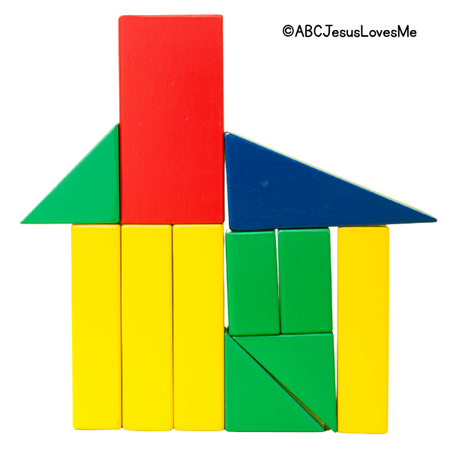
Use various-sized blocks or boxes to build house.
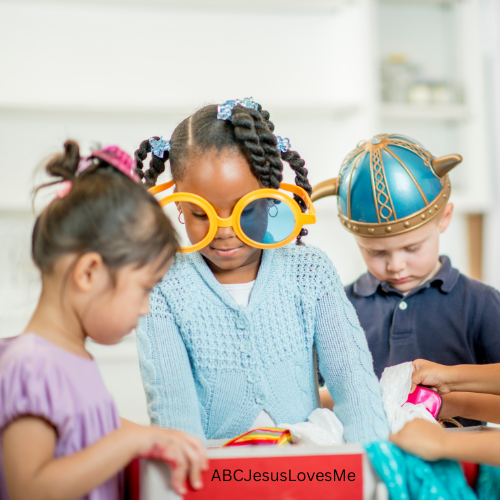
Provide the child with various hats to dress up as community helpers.
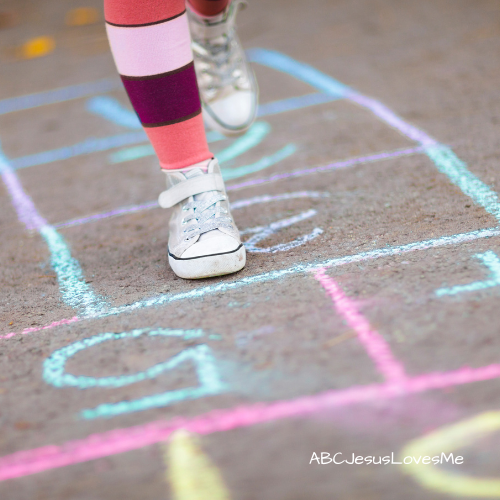
1. Draw a hopscotch course with numbers in the boxes.
2. Toss a small object, such as a rock or bean bag, onto one of the numbered squares.
3. Jump through the squares. On single squares, hop on one foot; on side-by-side squares, use both feet (one foot in each square). If the child is not developmentally ready for hopping on one foot, jump with two feet together.
4. When you reach the end, turn around and hop back, picking up the object on your way.
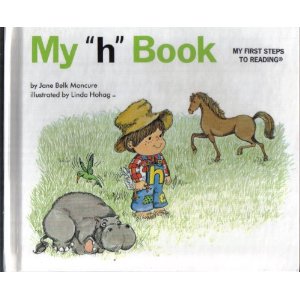 My "H" Book by Jane Belk Moncure - Be sure to use the phonetic sound of the letter and not just the letter name when reading the book. When we come to a letter, I have my child read the phonetic sound of each letter.
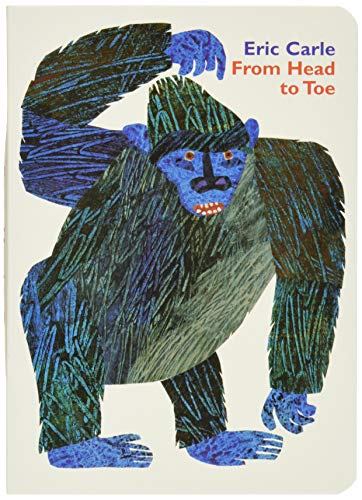
From Head to Toe by Eric Carle is an interactive, engaging book where animals demonstrate various movements, such as a giraffe bending its neck or a monkey wiggling its hips, encouraging young readers to follow along.

The Very Hungry Caterpillar by Eric Carle follows the journey of a small caterpillar as he eats his way through a variety of foods over a week's time. Starting with one apple and gradually increasing his intake, the caterpillar's appetite grows until he transforms into a beautiful butterfly. This classic story contains repetitive text, a focus on counting, days of the week, and the life cycle of a butterfly.

We're Going on a Bear Hunt by Michael Rosen is a fantastic book for exploring spatial relationships. Encourage the children to act out the movements as you read. Invite them to repeat each line after you.
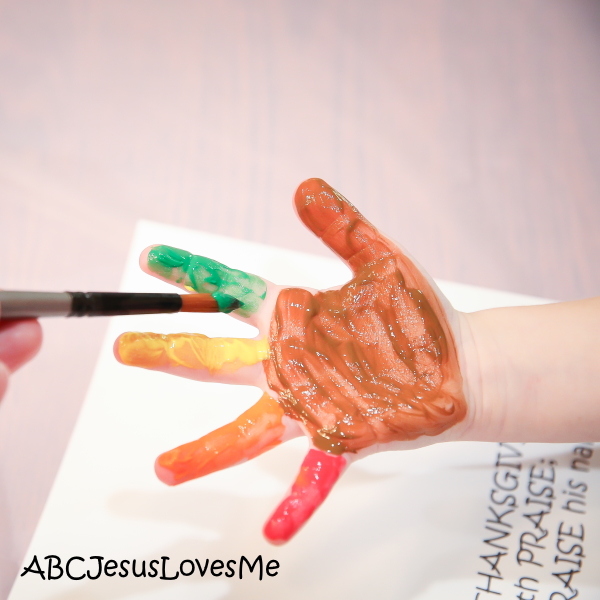
Looking for a meaningful gift that parents, grandparents, or loved ones will treasure? Our Hand and Footprint Calendar Digital Download offers a personal touch, with monthly Bible verses and space for unique handprint or footprint art to make each month extra special.

Old Hat New Hat by Stan and Jan Berenstain is a playful story that explores the concept of hats through the eyes of a bear. The book contrasts old hats and new hats, showing how the bear tries on different hats and expresses his feelings about them, from silly to serious. With its simple, repetitive text and humorous illustrations, this book introduces young readers to opposites and encourages them to have fun with fashion and creativity.

Green Eggs and Ham by Dr. Seuss is a beloved story about Sam-I-Am, a character who tries to convince an unnamed friend to try green eggs and ham, despite his refusal to do so in various situations. Sam-I-Am's persistence ultimately leads to a humorous and satisfying conclusion when the friend discovers he actually likes the dish. This timeless book is perfect for teaching children about the value of open-mindedness and trying new things.

The Little Red Hen is a classic folk tale that teaches valuable lessons about hard work and teamwork. In the story, the little red hen finds some grain and decides to plant it, but none of the other animals will help her. She continues to work alone, planting, harvesting, and baking the bread. When the bread is finally ready, the other animals want to share in the reward, but the hen decides to enjoy it all by herself. This story emphasizes the importance of responsibility, self-reliance, and the consequences of not helping others.

Hop on Pop by Dr. Seuss is a simple and playful rhyming book perfect for early readers to teach rhyming and directional words. The story features short, fun sentences that follow a series of silly actions and situations involving the characters.

There is a Bird on Your Head! by Mo Willems is a humorous story featuring Elephant (Gerald) and Piggie. Gerald is distressed when a bird lands on his head, and his frustration grows as more birds arrive and build a nest. Piggie remains calm and helps Gerald find a solution to his problem. The simple, repetitive text and playful illustrations make it an engaging read, teaching children about problem-solving, patience, and friendship with a touch of humor. Spend time focusing on the pictures and do a picture walk through the story to fully appreciate the humor and emotions conveyed through the artwork.

The Kissing Hand by Audrey Penn is a heartwarming story about a young raccoon named Chester who is nervous about going to school for the first time. His mother reassures him by giving him a special "kissing hand" — a kiss placed in his palm that he can carry with him whenever he feels scared or lonely. The story beautifully explores themes of love, comfort, and courage, offering children a gentle way to cope with separation anxiety.

Harry the Dirty Dog by Gene Zion is a charming story about a white dog named Harry who hates baths. To avoid getting one, Harry runs away and gets so dirty that he becomes unrecognizable. When he finally returns home, his family doesn’t recognize him, but Harry's cleverness and love for his family help him find his way back.

The Cat in the Hat by Dr. Seuss is a fun story about a mischievous cat who brings chaos and excitement to two children on a rainy day. With the help of Thing 1 and Thing 2, the cat creates a mess but manages to clean everything up before their mother returns. It's a classic, lively tale full of rhymes and playful antics.

In The Hat by Jan Brett, a mischievous little hedgehog accidentally gets stuck in a cozy knitted hat after trying it on. As he waddles around in the hat, various animals—such as a curious owl, a clever rabbit, and a gentle deer—spot him and mistake him for a new kind of creature. Each animal reacts with surprise and curiosity, creating a humorous situation as they try to figure out what this new "animal" could be. The story showcases themes of friendship and imagination, complemented by Brett's intricate and beautiful illustrations, making it a delightful read for children.

Hermie: A Common Caterpillar by Max Lucado tells the story of Hermie, a caterpillar who feels ordinary and overlooked compared to others. As Hermie struggles with his insecurities, he learns that God has a special plan for everyone, even the seemingly "common." This heartwarming story teaches children about self-worth, trust in God, and the idea that each person is unique and important in their own way.
Introduce your preschoolers to the God's love with our fun and engaging New Testament Curriculum. Filled with interactive Bible stories, play-based activities, and learning crafts, this Curriculum brings the teachings of Jesus to life in a way young children will understand and enjoy.

Harold and the Purple Crayon by Crockett Johnson is a classic children's book that follows a young boy named Harold who uses his purple crayon to draw his own adventures. With just a simple crayon, Harold creates imaginative landscapes and encounters, from a moonlit adventure to sailing across a sea. This charming story not only sparks creativity and imagination but also emphasizes the power of drawing and storytelling in a child's world.
All Printables Free for Immediate Family Use or with a Current License Only
Activity and Coloring Poster
Writing Worksheet