Teaching math to preschoolers doesn’t require worksheets or pressure—it happens naturally through play and everyday moments. On this page, you’ll find simple, hands-on tips to help a child build number sense, recognize patterns, compare sizes, and develop early problem-solving skills. With a little intention and a lot of fun, math can become a confident and joyful part of the day.
• Help with laundry and match socks.
• Gather a bucket of shoes and match pairs.
• Match various lids with pots, pans, and dishes.
• 
Dawn suggested this book for teaching money.
• Develop patterns through beading (Lacing Beads).
• 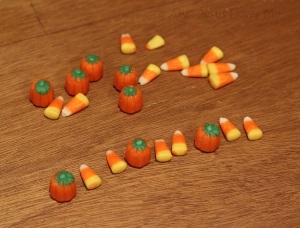 Using candy corn and candy pumpkins, make patterns. This images shows ABB (left to right) or AAB (right to left) patterns.
• Create patterns using different colors and shapes for review.
• 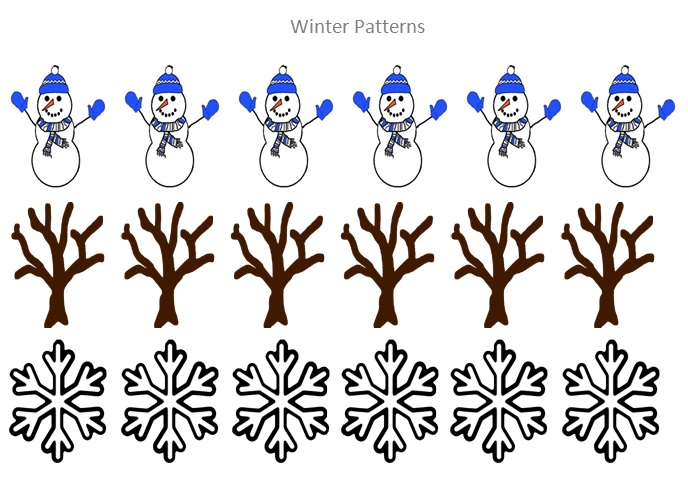 Winter Patterns - Create patterns using the Winter Images
• Battleship 
• Make patterns using the game Connect Four, Checkers, or different colored post-it notes
• 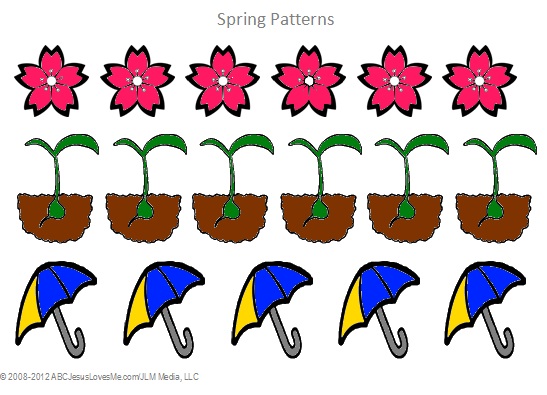 Spring Patterns - Create ABB patterns using the Spring Images.
• At snack time, create a pattern using two different snacks

Orange Pear Apple Bear by Emily Gravett contains only five words: apple, pear, orange, bear -- and there. Rearranging the words into different patterns, the simplicity of this book allows for learning in rhyming, patterns, and smiles.
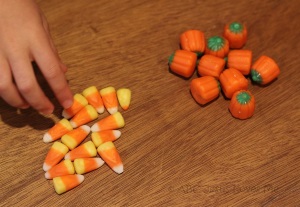
• Create a pile of candy corn and pumpkin candies. Instruct the child to sort the two candies.
• A muffin tin makes a fun place to sort small items during meal preparations.
• Measuring cups in the bathtub are great fun and can be used to teach size.
• Using a bag of various beans for soup, let the child sort them into a muffin tin.
• Using train track pieces, sort the different shapes and lengths of pieces.
• Sort play food into vegetables, fruits, milk/dairy, meat or pantry, refrigerator, freezer; if you don't have play food, you can also use pictures of food.
• Sort UNO Cards
Left and Right
Press Here Book
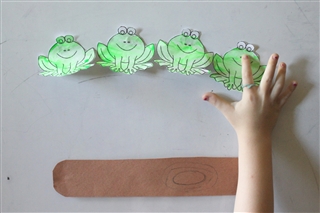
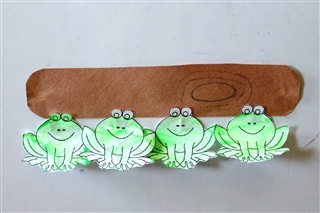
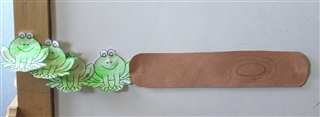
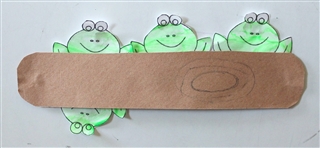
Print the Frogs Spatial Concept Printable on green paper. Cut out. Place sticky tack on the back of each frog.
Place a brown “log” made of construction paper on a larger board or mat. (We used an easil.)
Call out a spatial word (i.e. under, left) and have the child place the frogs around the log to correctly represent the concept.
Above, Under, Left, Behind...
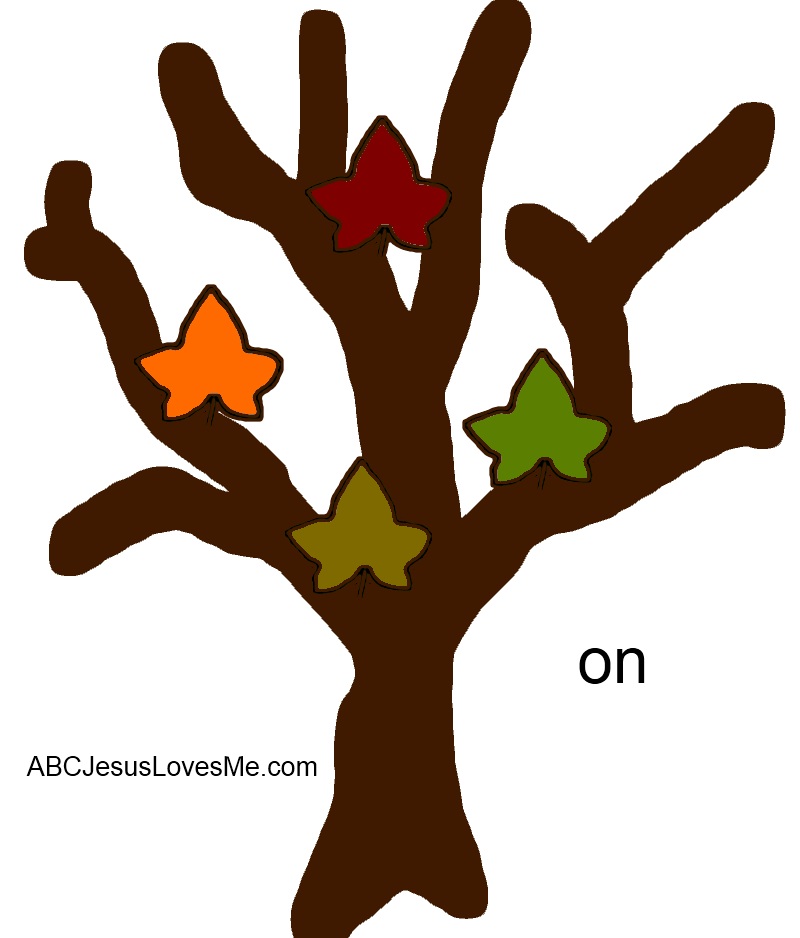 Print the Spatial Tree . Color the leaves using fall colors. Cut the leaves out. Place sticky tack on the backs of each leaf.
Post the tree on the wall. Call out a spatial word (i.e. under, left) and have the child place the leaves around the tree to correctly represent the concept.
• Place item in relationship to a hula-hoop.
• Use toys or stuffed animals to place spatially with a chair or the child.
• Using a bridge or box, drive toy cars or tractors around, on, under, etc the bridge.
| High, Low | Up, Down | Above, Below |
| Beside, Next To, Between | Before, After | Around, through |
| Behind, In back, In Front | Left, right | On, off |
| First, Middle, Last | Top, Middle, Bottom | Near, Far |
| Under, over |
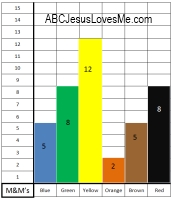
Lay a pile of 40 M&M's on the table. Write the name of each color on the bottom of the M&M Graphing worksheet (red, blue, green, yellow, brown, orange). Write the numbers 1-15 up the lefthand column. Sort the M&M's by color. Start with one color and count the number of M&M's in that pile. Show the child how to graph the number of M&M's. When finished, write the total number of each color on the graph. Then count the total on the graph to make sure 40 M&M's are accounted for.
This page may contain affiliate links. Please read our disclosure policy.
Lorem ipsum dolor sit amet, consectetur adipiscing elit, sed do eiusmod tempor incididunt ut labore et dolore magna aliqua. Ut enim ad minim veniam, quis nostrud exercitation ullamco laboris nisi ut aliquip ex ea commodo consequat.