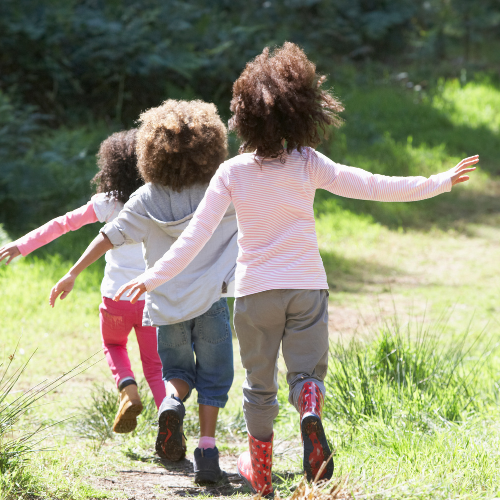
Outdoor play is an important part of a child's preschool experience. Fresh air, open space, and opportunities to safely explore provide children with valuable experiences that support physical, cognitive, social, emotional, and creative development.
An engaging outdoor environment doesn't have to be elaborate or expensive. With an intentional setup, you can create a space that encourages children to move, explore, imagine, create, and discover God's world.
Beyond traditional playground equipment, provide a variety of spaces and materials that invite children to explore different types of play.
1. Gross Motor Play
Give children plenty of opportunities to move their bodies and build coordination, balance, and strength.
- Provide balls, tunnels, cones, and riding toys.
- Create simple obstacle courses.
- Add stepping stones, balance beams, or low climbing structures.
- Encourage running, jumping, hopping, and kicking.
2. Sensory Exploration
Outdoor environments naturally provide wonderful sensory experiences.
- Offer sand and water play.
- Provide containers, scoops, funnels, and measuring cups.
- Create a mud kitchen with child-sized utensils.
- Explore leaves, rocks, pinecones, flowers, and other natural materials.
3. Nature and Discovery
Help children develop curiosity about the world around them.
- Plant flowers, herbs, or a small vegetable garden.
- Provide magnifying glasses for observing nature.
- Watch insects, birds, and other wildlife.
- Collect and sort leaves, rocks, and sticks.
- Observe changes in weather and the seasons.
4. Imaginative and Dramatic Play
Outdoor spaces can become places for endless pretend play.
- Set up a pretend outdoor kitchen or restaurant.
- Provide playhouses, tents, or tunnels.
- Offer dolls, toy animals, and pretend gardening tools.
- Use large cardboard boxes to create houses, vehicles, or stores.
5. Creative Play
Give children opportunities to create and express themselves outdoors.
- Provide sidewalk chalk.
- Offer paintbrushes and water for painting fences or sidewalks.
- Create an outdoor music area with child-safe instruments.
- Provide natural materials for building and creating.

Join the ABCJesusLovesMe challenge and watch your child thrive! Say goodbye to couch potato days and hello to vibrant outdoor adventures filled with play, learning, and essential Vitamin D. Discover all of the details and tips in this FREE download.
An engaging outdoor environment must also be a safe environment. Before children begin playing, take time to inspect the space and consider potential hazards.
1. Inspect the Play Area
- Check playground equipment for loose parts, sharp edges, and damage.
- Look for holes, uneven surfaces, exposed roots, and tripping hazards.
- Remove trash, broken toys, and potentially dangerous objects.
- Check for poisonous plants, mushrooms, and hazardous insects (e.g. bees).
- Make sure age-appropriate equipment is provided.
2. Provide Appropriate Surfaces
- Use appropriate impact-absorbing materials under and around climbing equipment.
- Keep walking and running areas free of obstacles.
- Make sure surfaces are stable and appropriate for the activities being offered.
- Avoid hard surfaces underneath climbing equipment.
3. Plan for Weather, Surface, and Sun Exposure
- Provide shaded areas for children to rest and play.
- Make drinking water readily available.
- Apply sunscreen according to family permissions and program policies.
- Monitor temperatures and weather conditions.
- Bring children indoors when conditions become unsafe.
- Require children to wear closed-toe shoes that securely cover and protect their feet during outdoor play. This helps minimize injuries from falls, stepping on objects, or playground equipment.
4. Maintain Active Supervision
- Position adults where they can see and hear all children.
- Establish clear boundaries for where children may play.
- Count children regularly, especially when transitioning.
- Stay close enough to intervene when needed.
- Teach children simple outdoor safety expectations.
- Maintain a cell-phone free outdoor environment, except for emergencies.
You don't need a large playground to create an engaging outdoor environment. Even a small space can offer several opportunities for learning and exploration.
Consider dividing your outdoor area into different play zones or centers. Here are some examples:
Gross Motor or Active Centers
Sensory & Nature Centers
Creative & Imaginative Centers
Quiet & Exploration Centers
Games & Social Play Centers

Join us for a heart-to-heart with friends who truly get your parenting journey. Co-hosted by Heidi Franz, creator of ABCJesusLovesMe, this podcast provides a cozy, supportive space for practical advice, shared experiences, and heartfelt encouragement. Tune in on your favorite app or right here on the web!
Outdoor play is more than a break from classroom learning. It provides meaningful opportunities to reinforce skills and introduce new concepts.
As children play, adults can intentionally encourage learning by:
- Counting rocks, sticks, and other natural objects.
- Comparing sizes, shapes, and quantities.
- Identifying colors found in nature.
- Discussing weather and seasonal changes.
- Encouraging children to describe what they see, hear, and feel.
- Practicing taking turns, sharing, and working together.
- Talking about how God created the world around us.
Remember: You don't need to direct every moment of outdoor play. Sometimes the best learning happens when adults step back, observe, ask thoughtful questions, and allow children time to explore. The goal is to create an environment where children feel safe, have room to grow, and are encouraged to learn through play.