
Social-emotional development is an important part of helping a child build relationships, understand feelings, and develop a positive sense of self. Four-year-olds are becoming more confident in their interactions with adults and peers while learning to cooperate, communicate their feelings, and make independent choices.
This is a season of growing friendships, pretend play, emotional awareness, and increasing independence. Children are beginning to work with others toward shared goals, recognize and respond to the feelings of others, and develop a better understanding of their own interests and abilities.
Although 4-year-olds are becoming more independent, they still need adult guidance and encouragement as they navigate relationships, manage emotions, and learn to handle social challenges.
Four-year-olds are developing positive relationships with familiar adults and peers. They are becoming more cooperative during play and group activities and beginning to work with other children toward a shared goal. Pretend play provides opportunities to communicate, share ideas, and practice working through social challenges. Children are also beginning to initiate interactions with adults and learn how to handle disagreements with support.
Ways to Encourage Relationship Development
- Build Relationships: Spend time talking and interacting with children. Provide opportunities for conversations and shared activities with familiar adults.
- Encourage Cooperative Play: Provide activities that encourage children to work together, such as building with blocks, completing puzzles, or creating something together.
- Develop Pretend Play: Set up dramatic play opportunities where children can take on different roles, communicate ideas, and work toward a shared goal.
- Practice Sharing and Taking Turns: Play simple group games and provide opportunities to share materials. Offer reminders and guidance when needed.
- Encourage Positive Interactions: Help children practice initiating conversations and interactions with adults and classmates.
- Practice Resolving Conflict: When disagreements occur, help children communicate their concerns, listen to one another, and work toward a solution. Provide adult support as needed.
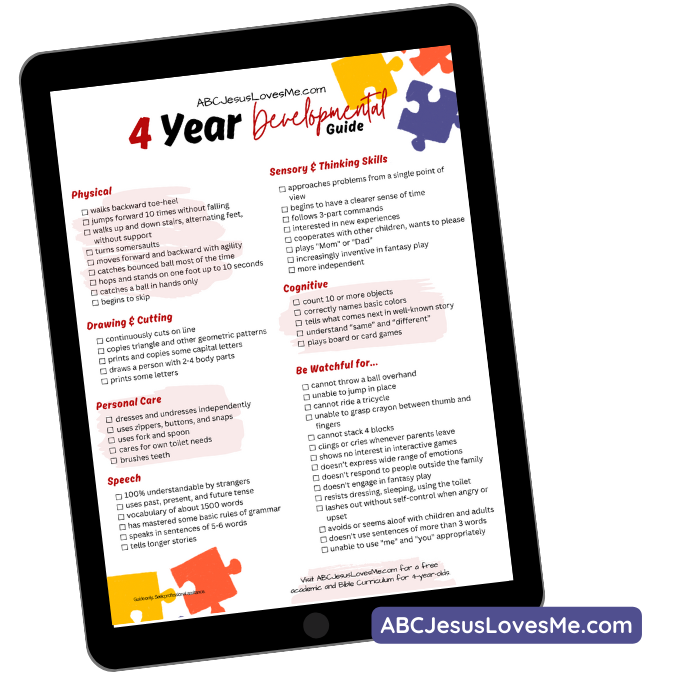
Understand of your child’s growth with our FREE 4-Year Development Checklist! This handy tool helps you track key milestones and celebrate your little one’s progress. Download your checklist today and take an active role in monitoring your child’s development!
Four-year-olds are developing a greater ability to recognize, name, and communicate a range of emotions. They are beginning to use words, actions, and facial expressions to express how they feel. With adult guidance, children are learning simple strategies to manage their emotions and behavior. They are also becoming more aware of the feelings of others and beginning to respond with empathy and comfort.
- Identify Emotions: Talk about familiar emotions such as happy, sad, angry, scared, and surprised. Encourage children to recognize and name these feelings in themselves and others.
- Explore Facial Expressions: Use mirrors, pictures, and books to explore how facial expressions communicate feelings. Encourage children to imitate different expressions.
- Encourage Emotional Language: Help children use words to communicate their feelings. Model phrases such as "I feel frustrated" or "I am excited."
- Practice Managing Emotions: When children become upset, provide guidance and help them practice simple strategies to manage their emotions and behavior.
- Recognize Feelings in Others: Talk about how others may feel in different situations, both in books and in real life examples. Encourage children to notice when someone is upset.
- Practice Showing Empathy: When someone is sad or hurt, demonstrate simple ways to offer comfort, such as asking if they are okay or offering help.
Four-year-olds are developing a stronger understanding of their personal characteristics, interests, preferences, and abilities. They are becoming more comfortable expressing their likes and dislikes, making choices, and attempting familiar tasks independently. They are also beginning to recognize that other children may have different interests and abilities. These experiences help children develop confidence and a growing sense of independence.
Ways to Encourage Self-Awareness and Self-Concept
- Talk About Personal Characteristics: Encourage children to describe themselves, including familiar physical characteristics, interests, and abilities.
- Explore Likes and Dislikes: Talk about favorite activities, toys, foods, and experiences. Encourage children to communicate their individual preferences.
- Recognize Individual Differences: Talk about how people have different interests, preferences, and abilities. Help children recognize and appreciate these differences.
- Offer Choices: Provide opportunities throughout the day for children to make simple choices. Encourage them to communicate what they prefer.
- Encourage Independence: Give children opportunities to attempt familiar tasks independently. Allow time for them to try before offering help.
- Practice Self-Care: Encourage children to complete familiar self-care activities independently, such as dressing, putting on shoes, and washing hands.
- Celebrate Accomplishments: Recognize children's efforts when they attempt new or familiar tasks. Encourage them to take pride in their growing abilities.
Get your child ready for kindergarten with the Complete 4 Year Curriculum. The engaging, easy-to-follow Lesson Plans and activities focus on age-appropriate academics, Bible stories, character training, and developmental skills, providing the perfect foundation for a child’s educational journey. Curriculum printed and mailed to you, ensure that your child or students are confident and prepared for the next step!
Social-emotional development happens throughout the day, not just during planned activities. Playtime, group activities, conversations, pretend play, and everyday interactions all provide opportunities to help children grow.
The goal is not to add another lesson to an already busy day. It is to recognize the opportunities already present and use them intentionally.
Remember: You are doing more than teaching children academics. You are helping four-year-olds build meaningful relationships, understand and manage their emotions, appreciate their individual abilities, and grow in confidence and independence.