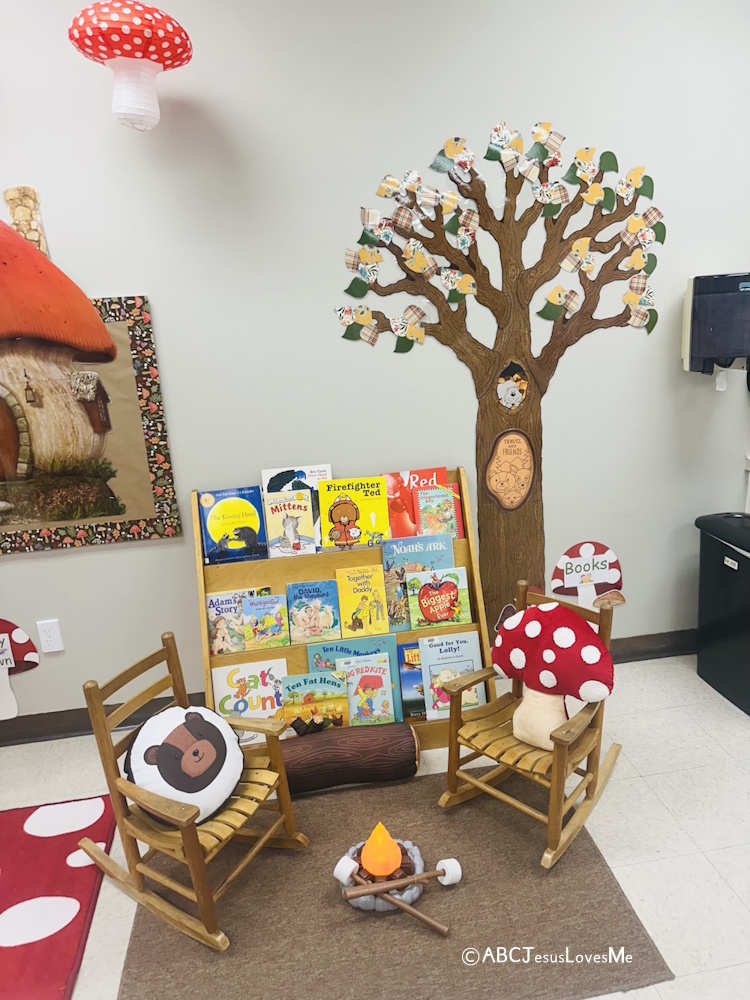
Preschool centers create meaningful opportunities for a child to explore through play. Discover how to design centers that work, why they matter, and how to manage the number of children in each area. Also see sample center ideas for indoor and outside play. With a few intentional choices, any classroom can run smoothly and help the child learn through hands-on discovery.
You'll discover on this page:
A learning center or station is a designated, well-equipped area where kids explore specific skills and subjects through play-based, hands-on activities. This learning helps the child develop independence and development in areas like art, math, literacy, science, and dramatic play. These zones allow children to choose activities, work in small groups or independently, and practice concepts taught by the teacher in a fun, self-directed way. Common examples include block areas, kitchen dramatic play, sensory tables, and reading nooks.
Preschool centers are more than a way to organize the classroom—they are intentional spaces where meaningful learning happens through play. As the child moves through each center, the teacher’s role is to guide only when needed and recognize growth over time. By observing how the child engages, solves problems, interacts with others, and stays focused, the teacher can see development unfold and adjust support to help the child continue progressing throughout the year.
1. Children best learn through play.
Centers provide the intentional play needed to build creativity, provide hands-on learning, and practice new concepts. Centers lead to more complex and meaningful play and work by children.1
2. Encourage independent learning.
Centers give the child freedom to explore age-appropriate materials and practice problem-solving at their own pace. This independence builds confidence and helps the child take ownership of learning while demonstrating separating from an adult. The child also seeks an adult for support when needed in play or in peer conflict.
3. Support social and emotional development.
Working beside classmates teaches turn-taking, negotiation, teamwork, compromising, and communication. Each of these skills strengthens the child’s ability to succeed in both group and individual settings. Learning centers also help the child recognize the emotions of peers and respond with empathy and compassion. Over time, the child begins to develop cognitive empathy by noticing and inferring what others may be thinking or feeling. This growth supports appropriate responses using words, gestures, and facial expressions.
4. Build academic and developmental readiness.
Well-planned centers naturally weave in early literacy, math, fine motor, gross motor, and sensory experiences. The child learns through hands-on exploration rather than passive instruction.
5. Create predictable structure.
Centers give the classroom a rhythm. When the child knows what to expect, transitions become smoother, behaviors improve, and learning time becomes more productive.
6. Promote small-group interaction.
Children prefer to work in small groups.1 This setting allows peers to coordinate play by assigning roles, materials, and actions. For example, in a kitchen center, one child may cook, another serve food, and another act as the customer.
7. Exploration along areas of interest.
The division of learning and activities gives children the opportunities to explore along areas of their interest.1
8. Build attention to tasks with creativity and inventiveness.
Open-ended, play-based center activities require the child to focus, problem-solve, and stay engaged, which strengthens attention skills while also encouraging creative thinking and flexible approaches to learning.
9. Promote planning, imagination, and learning from experiences and senses.
Through imaginative and role-play experiences, the child learns to plan, think ahead, and make sense of the world, building cognitive flexibility, problem-solving skills, and deeper understanding through hands-on exploration.
10. Develops a growth mindset.
By praising effort and problem-solving rather than just final results, center-based play teaches children to see challenges as opportunities to learn. This environment encourages resilience, helping young learners understand that skills develop through practice and persistence over time.
1 Birsh, J. R., & Carreker, S. (Eds.). (2018). Multisensory Teaching of Basic Language Skills (4th ed.). Paul H. Brookes Publishing.
1. Start with a clear classroom layout.
Divide the room into distinct zones using rugs, shelves, or low dividers. For example, place blocks on a hard floor surface, books on a rug, and art supplies near a sink. Visual boundaries help the child understand how each space is meant to be used.
2. Stock each center with purposeful materials.
Choose items that match your teaching goals.
Each item should offer hands-on learning and encourage exploration.
3. Train the children to correctly use and put away the items in each center.
Children should be intentionally taught how to use and care for the materials in each Learning Center. This includes modeling how to use the items appropriately and how to return them to their designated place when finished.
Before introducing a center, decide clear expectations for how the toys and supplies are to be used. For example, in a play dough center, determine whether colors may be mixed. If paintbrushes are included, teach the child where to place the brush when finished and how to clean it if appropriate. When Letter Posters are used for forming letters with play dough, the child should be shown how to roll the play dough and shape it to match the letter.
Each expectation must be directly taught and practiced. Children are not expected to know these routines instinctively; consistent instruction and gentle reminders help the child develop independence, responsibility, and confidence within each Learning Center.
4. Keep materials organized and accessible.
Use labeled bins with pictures so the child knows exactly where things belong. Point to and read them naturally throughout the day. This supports independence and teaches responsibility at clean-up time. Adding words to the labels helps with early reading.
5. Rotate materials to maintain interest.
You don’t need brand-new toys every month. Simply swap out puzzles, add seasonal props, or introduce new books to keep centers fresh and engaging.
6. Engage with the children.
During center time, preschool teachers can engage with students by asking open-ended questions about what they are doing and thinking. Questions encourage children to talk, think, and explore their ideas. These simple conversations help build language skills, problem-solving, and deeper learning through play.
Sample questions to ask the child:
Get your FREE Roll-a-Picture Thanksgiving & Christmas Packet today! Keep little hands busy and spark creativity with these fun, easy games that build fine motor skills and promote learning. Roll a turkey, snowman, Christmas tree and more, and enjoy playful moments during family gatherings, cozy game nights, or classroom activities!
Research continues to show that technology affects the way a young child learns and develops. Whether the program is labeled “educational” or not, screen use engages the brain differently than hands-on play. When a child is on a screen, the child is not strengthening imagination, fine and gross motor skills, problem-solving, or social interaction in the same way that happens through independent play, group play, trial and error, and cause-and-effect learning.
Because the toddler and preschool years are a critical time for brain development, hands-on experiences matter. Building with blocks, pretending, exploring, moving the body, and interacting with others all strengthen the connections in the brain that prepare the child for future learning.
The American Pediatric Association and The American Academy of Child and Adolescent Psychiatry have guidelines as well.
Research also shows that many children are already receiving far more technology time at home than these recommendations suggest. Because of this, the ABCJesusLovesMe Curriculum intentionally does not include technology beyond digital cameras (for data collection in the 4 Year Curriculum) and optional song videos for teachers. My goal is to provide the child with a technology-free learning environment where the child can explore, create, move, and learn through real-life experiences.
If state standards require it, I recommend keeping use to a minimum and always using it alongside an adult, as described above.
There is often debate about whether children should be free to move between centers or remain in one center for a set period. Allowing the child to choose where to play encourages exploration and engagement with activities they enjoy. However, this freedom can sometimes lead to overcrowding in popular centers or cause some children to focus only on one type of play. The following strategies can help maintain balance and ensure every child benefits from center time.
1. Use visual markers.
Place a set number of tags, clothespins, or picture cards at each center. If the center allows two children, provide two markers. The child may enter only if a marker is available. This keeps each center calm and ensures every child can fully participate.
2. Teach the routine early and practice often.
Walk the class through each center and demonstrate how to take a marker, what to do if the markers are gone, and how to return markers when leaving. Repetition builds consistency. Be consistent in the expectations so it is fair for all.
3. Keep centers balanced.
Place more popular centers farther apart to spread out movement. Offer multiple appealing choices so the child always has a place to go.
4. Use timers if needed.
For highly preferred centers, a short rotation timer helps ensure everyone has a turn. Keep it gentle and encouraging rather than strict.
5. Stay observant.
Adjust capacity as needed. If it becomes too busy for two children, limit it to one for a while. If a center feels too empty, consider opening it up to more.
6. Encourage trying something new.
To begin center time, encourage each child to choose a center they haven't tried for a while. After a set amount of time, allow the children to choose.
7. Volume Control
As children play, noise naturally increases. One way to manage volume is with a decibel meter app, which visually displays sound levels from green to red, alerts when limits are exceeded and helps the child self-regulate through interactive feedback. Using an app like this creates a calmer environment and reduces the need for constant teacher reminders. As with any classroom expectation, train the children to recognize the app’s alert and respond appropriately when it sounds.
8. Train for Disagreements
Disagreements in Preschool Centers are opportunities to train the child, not moments to immediately fix. Teach the difference between tattling and telling, and give simple phrases like “please stop” or “I’m still using that” so the child can respond first. Encourage the child to use a kind but firm voice to stand up to unkind behavior, stepping in only when needed. Over time, the goal is for the child to confidently solve small conflicts with words.
9. Mistakes Happen
Help children understand that mistakes happen during play (for example, a tower may accidentally get knocked over or a structure may fall apart). Encourage resilience by helping them see that mistakes are a normal part of learning. Train the children to ask for help before they get too frustrated.
10. Consistent Rules
Consistent rules create a safe environment for all children while protecting the toys, books, and supplies. Clearly teach routines and expectations in each center and practice them often so the child knows how to move, use materials, and interact with others. Consistently expect the child to follow safety guidelines, gradually reducing reminders while encouraging the child to think before acting and make safe choices. Help the child understand the results of unsafe choices (e.g., toys break, friends get hurt, or access to a center is paused for a time). With training the child can carry these habits into daily activities.
Here are practical, center-based ideas to support dual language learners in a natural, play-based way. The goal is to build understanding, confidence, and language through hands-on experiences and meaningful interaction.
Dramatic Play Center
Library Center
Writing Center
Block Center
Art Center
Sensory Table
Math/Manipulatives Center
Science/Discovery Center
Music and Movement Center
Puzzles and Games Center
Across all centers, keep language simple, repeat often, use visuals, and allow the child time to respond. The goal is steady exposure and confidence, not pressure to speak perfectly.
Available in both large and small formats, the Be Intentional Planner is designed to help you live with purpose as the woman God has called you to be. Whether you prefer a spacious layout or a compact size for on-the-go planning, each spiral-bound planner is filled with the beloved Be Intentional components to keep your goals and plans on track.
With infants, centers are not places where children sit to complete a task. Instead, they are designated, safe zones that invite targeted sensory and motor exploration. They also provide key opportunities for intentional adult-child interaction.
Toddlers are driven by a need for autonomy, containment, and maximum effort. They love moving objects from one place to another and testing cause and effect.
Define Clear Physical Boundaries: Use low shelves, area rugs, or colored tape on the floor to clearly define where a center begins and ends. This helps toddlers understand where specific toys belong.
Provide Duplicates: Toddlers engage heavily in parallel play (playing next to a peer rather than with them) and are still developing sharing skills. Having 2–3 of the exact same dump truck or scoop prevents friction.
Emphasize Functional Containment: Toddlers love putting things into containers and dumping them out. Every center should feature baskets, buckets, or boxes.
Scaffold Transitions: Use simple visual cues or a consistent transition song to signal when it is time to move from one zone to another.
Fine Motor & Science: Instead of standard sand, fill bins with large pom-poms, oversized wooden beads, or water. Provide scoops, measuring cups, and empty plastic bottles. Toddlers practice bilateral coordination by holding a funnel with one hand and pouring with the other.
Dramatic Play: A dramatic play zone stocked with familiar, real-world items rather than fantasy costumes. For example, set up a simple "Home" center with baby dolls, soft blankets, real (but non-breakable) pots and pans, wooden spoons, and empty clean food boxes. Toddlers love mimicking everyday routines like cooking, washing dishes, and putting a baby to sleep.
Spatial Awareness: Provide giant foam blocks, cardboard brick blocks, and wooden vehicles. Toddlers focus on stacking blocks as high as they can and knocking them down or building simple ramps using planks to watch cars roll down.
Understand a child’s growth with our FREE Development Checklists! These handy tools help you track key milestones and celebrate a toddler or preschooler's progress. Download a checklist today and take an active role in monitoring a child’s development!
Gross Motor Centers
Sensory & Nature Centers
Creative & Imaginative Centers
Quiet & Exploration Centers
Games & Social Play Centers
Asking open-ended questions enrich vocabulary, build understanding, and teach developmental concepts. The goal isn’t to get a “right answer,” but to invite the child to explain, wonder, and try. Supply children with alternate descriptive words to expand their oral language while playing (e.g., building - structure, car - vehicle, small - tiny).
🧱 Blocks / Building Center
🎨 Art / Creative Center
📚 Reading / Book Center
🧸 Dramatic Play Center
🔢 Math / Manipulatives Center
🧪 Science / Discovery Center
✂️ Fine Motor / Puzzles
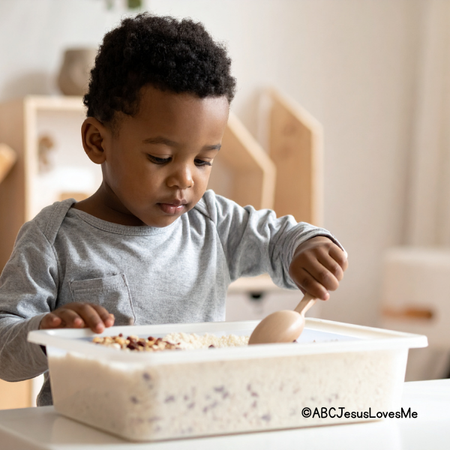
A sensory bin is a shallow container filled with a tactile base - sand, beans, rice - and paired with tools for play.
These bins are far more than just play stations; they are foundational environments for preschool development. As children dig, pour, and sift, they strengthen the small muscles in their hands (fine motor skills), build descriptive language, and practice social essentials like sharing and turn-taking.
To keep the experience fresh, I recommend rotating your sensory bins weekly. You can easily change the "feel" of the activity by swapping out three main components:
For easy cleanup, place the container on a plastic tablecloth or inside a kiddie pool—or simply take the activity outdoors.