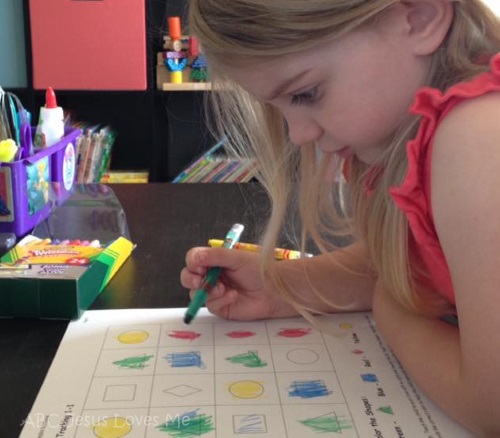
 image by erin
Visual perception is the process by which our brains interpret and make meaning of the visual information we receive through our eyes. It allows us to recognize objects, navigate environments, and respond appropriately to what we see. This page will provide helpful guidance, practical strategies, and practical tools to better understand visual perception and support its development or improvement in everyday life.
In January 2009, I first heard the term visual perception on a deeply personal level when an optometrist explained another significant delay my son was facing. At first, I assumed it had to do with visual acuity—how clearly he could see and whether he needed glasses—but his eyesight was actually fine. The doctor explained that while my son’s eyes were working properly, there was a breakdown in how his brain was processing what he saw—“the hardware is there, but there’s a software problem.”
I quickly saw how this difficulty affected every part of his learning. When a child struggles to correctly interpret visual information, reading, writing, and even simple daily tasks can become overwhelming. Determined to help him, I began creating visual perception activities and worksheets we could use together. Through consistent practice, faith, and God’s grace, those early resources eventually grew into the ABCJesusLovesMe Visual Perception Curriculum, and we saw real improvement in just a few months as his brain learned to more effectively process visual information.
12 years later, we faced a similar challenge when an optometrist identified my daughter’s reading struggles as a nine-year delay in visual tracking—another aspect of visual perception. Ironically, she was my one child who had not gone through the Visual Perception Curriculum. Just 3 months of visual therapy and she was at age-level for visual tracking.
The enemy has tried to shame me about the fact that I didn't cover specific visual perception activities with my daughter. In God’s grace I know that I can’t change the past, but I can use what we learned to equip and provide tools for others.
Visual Perception skills allow a child to look at an object, understand what it is, notice how it is similar to other objects, discover how it is different from other objects, and recognize if it is upside-down or right-side up, if a part of it is missing, how big it is, how far away it is from them, and how far away it is from other objects in the environment. These skills are imperative to reading, completing puzzles, cutting, writing, and other basic daily tasks. One website shared that “research has indicated a positive correlation between visual perception and academic performance in writing and math.”
Visual Perception activities are included in the 4 and 5 Year Preschool Curriculum and Visual Perception Curriculum.
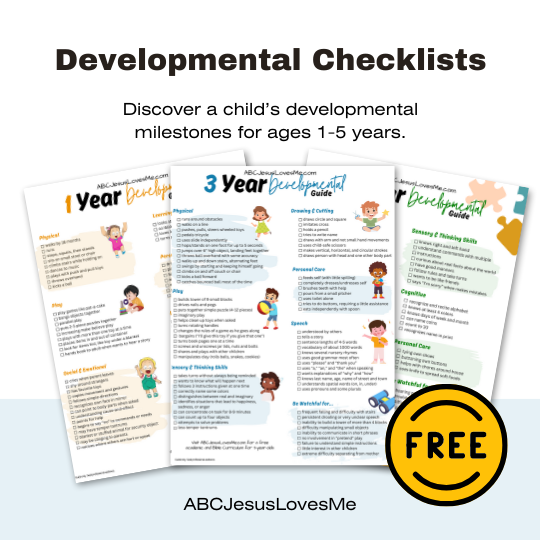
Understand of a child’s growth with our FREE Development Checklists! These handy tools help you track key milestones and celebrate a little one’s progress. Download a checklist today and take an active role in monitoring a child’s development!
Consider the Visual Perception Curriculum to be a fun way to do eye and brain exercises! Each set of worksheets include a what, why, and how as well as play-based ideas to extend learning.
This Curriculum includes exclusive access to helpful videos explaining how to teach each of the visual perception steps to a child. Also, enjoy watching a live video of how I introduce each set of worksheets to a preschooler.
Add a fun, fine-motor aspect to the worksheets by using buttons, candy, and blocks to mark correct answers.
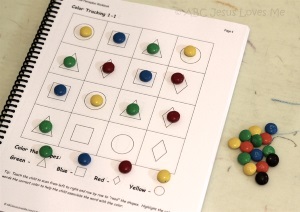 Using M&Ms, instruct the child to place the corresponding M&M's on the correct shape.
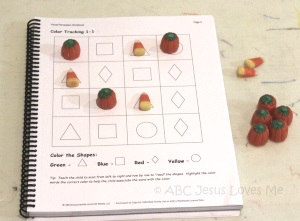 Using candy corn as triangles and candy pumpkins as circles, place the correct candy on the worksheet.
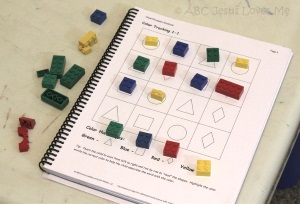 Using Legos, instruct the child to place the corresponding Legos on the correct shape.
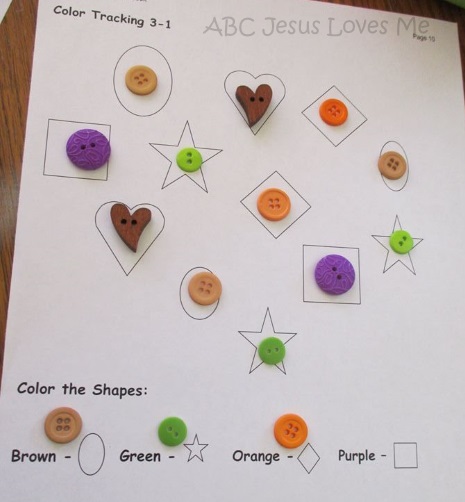 Using buttons, instruct the child to place the corresponding button on the correct shape.

Watch a child confidently learn through engaging, hands-on activities in the ABCJesusLovesMe Preschool Curriculum. With a focus on both academics and biblical values, this program nurtures development in every area, all while making learning fun. Click to discover how we can support a child's educational journey!
What's Missing Pictures
- Complete 2D shapes
- Complete Pictures
- Show only part of an object and have the child guess what it is
Object Pictures Matching - i.e., match a picture of fork with a real fork
Match shapes and pictures to silhouettes
Create a sequence and have the child repeat it.
Play Bingo