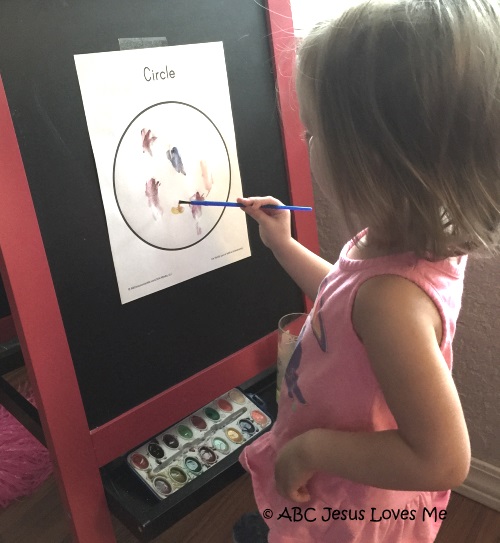
The right learning supplies can make teaching easier and learning more engaging. Because every dollar matters, I have carefully chosen products that provide the greatest learning value, encourage hands-on exploration, and don't require a lot of storage space.
No special materials are required for learning to happen, and every suggested item can be substituted with something you already own or can easily create. However, the supplies listed below are ones I personally used in our home and found to be some of the most versatile and worthwhile teaching tools. They are the same supplies recommended throughout the ABCJesusLovesMe Curricula and included on the supply lists because they can be used again and again in meaningful ways.
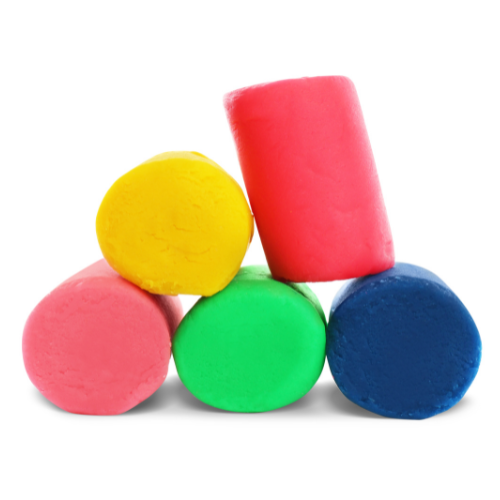
Play dough is one of the most versatile learning tools for toddlers and preschoolers. Children can form letters, numbers, and shapes while strengthening the hand muscles needed for writing. Rolling, pinching, cutting, and molding dough also encourage creativity, build vocabulary through conversation, and provide valuable sensory experiences. Play dough snakes provide a wonderful opportunity to teach proper scissor use. I would encourage that you wait to add Play Doh playsets until the child is older.
While there are many store-bought Play Doh options, I have found homemade play dough to be the softest, easiest to mold, and the most enjoyable for little hands.

Learning to use scissors is an important preschool skill that develops hand strength, coordination, and independence. Cutting paper, play dough, or craft materials also reinforces shapes, lines, letters, and numbers while preparing children for writing. Choose scissors that are safe and specifically designed to fit little hands for the greatest success.
There has been a lot of discussion about the best scissors for young children, and many specialty scissors have been designed to make cutting easier. After trying different options, I continue to recommend Fiskars Scissors because they are durable, easy for children to use, and actually cut well. If you choose a different brand, make sure the scissors cut cleanly instead of folding or tearing the paper. Also, check that they are lightweight enough for little hands to hold comfortably. For left-handed children, choose scissors that are designed for left-handed use or can be used comfortably by both right- and left-handed children.
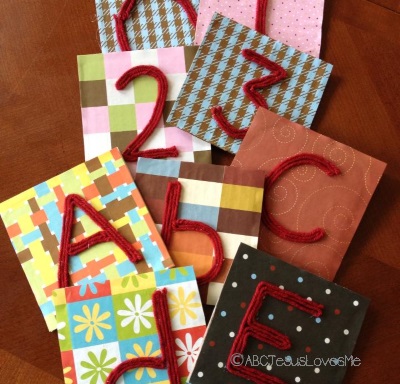
Tactile letters and numbers provide a hands-on, multisensory way for children to learn letter and number formation before they have the fine motor skills to hold a pencil correctly. By tracing each character with their fingers, children build muscle memory while learning letter recognition, number recognition, and proper formation. These are used weekly in the ABCJesusLovesMe 3 and 4 Year Preschool Curricula.


While I rarely suggest any items with batteries, the LeapFrog Fridge Phonics® Magnetic Set makes learning letters and their sounds engaging through music and play. As children match each magnetic letter to the bus, they hear the letter name, its sound, and simple phonics practice, helping build a strong foundation for reading.
While this toy is not used directly in the ABCJesusLovesMe Curricula, my children thoroughly enjoyed it, and I appreciated the playful reinforcement of letter recognition and phonemic awareness. The set includes uppercase letters. Sometimes you can find the lowercase letters as well.

Pattern blocks or parquetry blocks are wonderful for developing early math and critical thinking skills. Children learn about shapes, patterns, symmetry, spatial awareness, and problem-solving while creating designs or completing pattern boards. They also strengthen visual discrimination and creativity. Pattern blocks are used throughout the visual perception activities in the 4 and 5 Year Preschool Curricula.
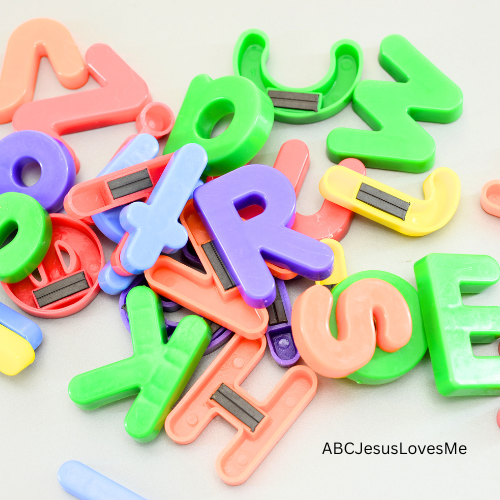
Magnetic letters and numbers provide endless opportunities for hands-on learning. Children can practice letter names, phonetic sounds, spelling simple words, counting, number recognition, sorting, matching, and simple math concepts. Because they can be used on a refrigerator, cookie sheet, or magnetic board, they encourage independent learning and playful exploration.
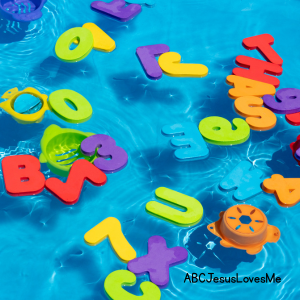
Learning doesn't have to stop at bath time. Foam letters and numbers turn everyday routines into opportunities to practice letter recognition, number identification, spelling simple words, counting, and sorting. Children often learn best when they don't realize they are learning.
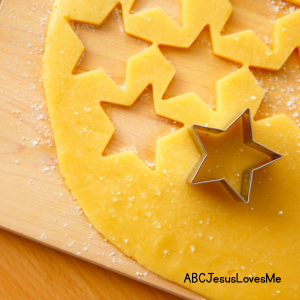
Cookie cutters are useful for much more than baking. They can be pressed into play dough or cookie dough, traced on paper, or used for shape recognition, alphabet activities, number practice, and sensory play. Their versatility makes them a favorite learning tool throughout the preschool years. Both letter and number cookie cutters are available to purchase.
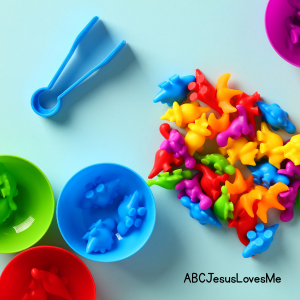
Sorting activities build a strong foundation for early math skills. Children naturally learn to classify objects by color, shape, size, or other attributes while also practicing counting, comparing, patterning, graphing, and vocabulary. Using beginning sorting sets, these simple activities encourage observation, logical thinking, and problem-solving in a playful way.
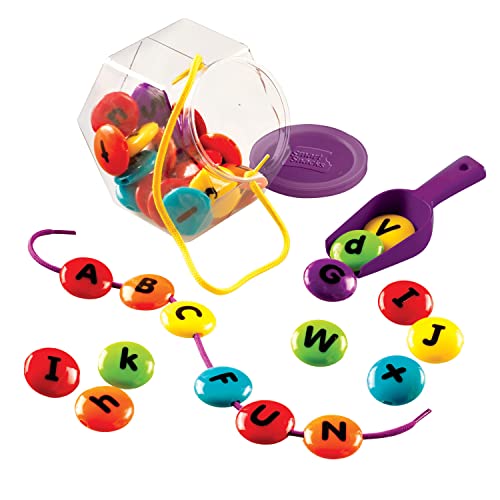
Lacing beads and lacing cards combine learning with purposeful play. As children lace around the cards, they strengthen fine motor skills while also practicing sequencing, patterns, counting, alphabet, vocabulary, and theme-based concepts such as the alphabet or numbers. Choosing lacing cards that match your current learning theme extends learning in a meaningful and engaging way.
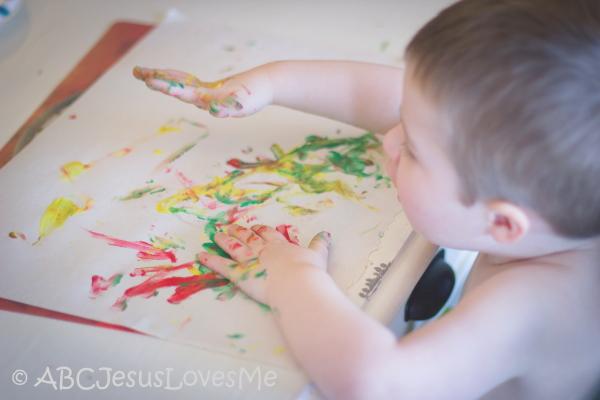
Finger painting combines creativity with meaningful learning. Children can explore colors, practice forming letters, numbers, and shapes, create patterns, and strengthen the muscles needed for writing. The sensory experience also encourages language development as children describe what they are creating and feeling.

Reusable drawing boards like the Aquadoodle
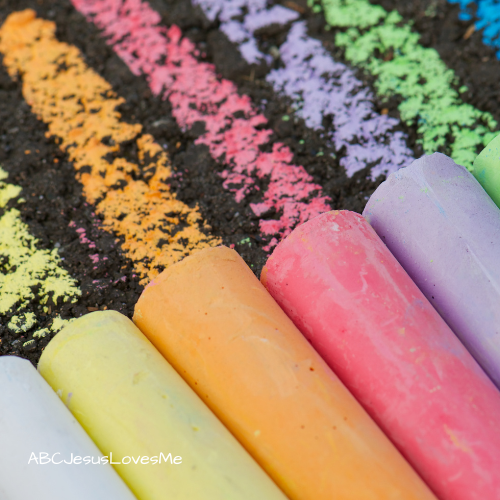
Sidewalk chalk takes learning outdoors and gives children a larger space to explore letters, numbers, shapes, sight words, and counting activities. Writing on sidewalks and driveways strengthens the larger shoulder and arm muscles that support handwriting while making learning active and fun. I especially like egg-shaped chalk because it fits comfortably in little hands.
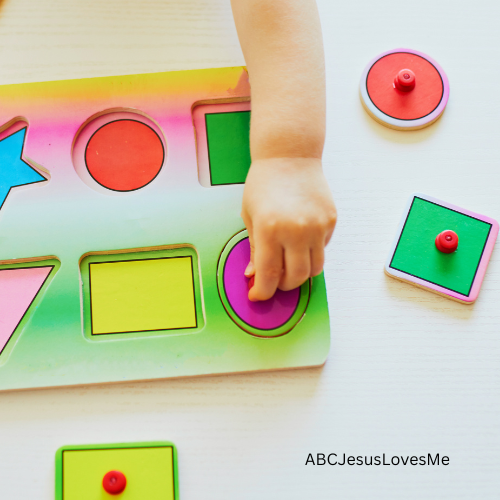
Peg puzzle are designed with easy-to-grasp knobs that are perfect for toddlers and young preschoolers. As children complete puzzles, they build vocabulary, strengthen visual discrimination, improve problem-solving skills, and learn about shapes, animals, vehicles, letters, or other themes. Puzzles also encourage perseverance and independent thinking.
You may notice that electronics, battery-operated learning toys, workbooks, and flashcards are not included on this list. Why? Because the toddler and preschool years are best spent actively exploring, creating, moving, and discovering. Hands-on learning materials encourage children to think, ask questions, solve problems, and interact with the important adults in their lives. The open-ended supplies recommended throughout the ABCJesusLovesMe Curricula can be used in countless ways, grow with your child, and provide far more learning opportunities than single-purpose toys or paper-and-pencil activities.